
Maximizing ROI: Choosing Cost-Effective Cloud Systems for SME Expansion in Southeast Asia

The Massive Potential vs. The Selection Dilemma
As a booming emerging market, Southeast Asia (SEA) holds immense commercial potential and has become the next logical stop for many SMEs expanding their footprint.
However, when embarking on this Cross-border E-commerce journey, businesses often face a dilemma in system selection:
International Giants: Western SaaS software is powerful but expensive, often lacks integration with the unique Asian ecosystem, and is hard to customize end-to-end.
Small Local Tools: Local software might be cheap but often lacks comprehensive features or System Scalability.
Finding a High Cost-Performance SaaS Platform that is both "Grounded" (practical/localized) and scalable within a limited budget is the key determinant of success or failure for SMEs going global.

3 Core Challenges SMEs Face in Southeast Asia
To succeed in SEA, SMEs must overcome three specific hurdles:
Challenge 1: Diversity of Language & Currency
SEA is not a monolith. Each country has its own official language and currency, with exchange rates that fluctuate frequently. Your management system must not only support a multi-language interface but also handle Real-time Exchange Rates, multi-currency settlement, and localized accounting.
Challenge 2: Fragmentation of Payments & Logistics
The infrastructure for payments and logistics is highly fragmented. Each country favors different e-wallets and local couriers. Without a unified infrastructure, the "Order-to-Delivery" process becomes chaotic and hard to standardize.
Challenge 3: Diversification of E-commerce Platforms
In SEA, platforms like Shopee, Lazada, and TikTok Shop coexist. For resource-limited SMEs, multi-channel operation is the norm. Managing orders, inventory, and customer data across these diverse platforms is a massive test of operational efficiency.
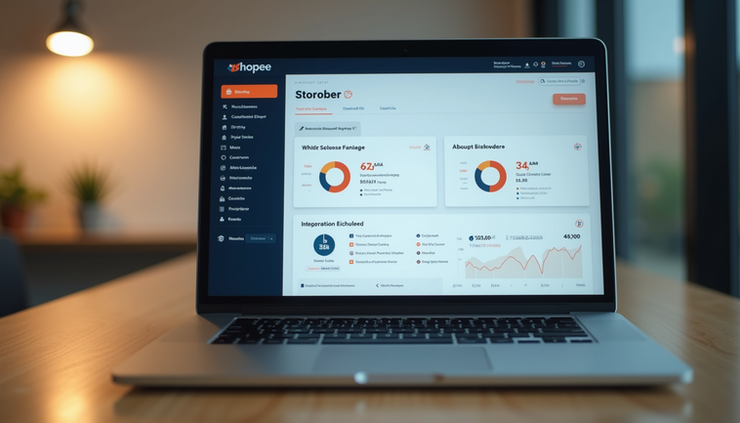
The Solution: 4 "Grounded" Core Features Your SaaS Must Have
To tackle the complexity of the SEA market, your SaaS solution must possess these four practical capabilities:
Feature 1: Robust Multi-Language & Multi-Currency Capabilities
An ideal platform must go beyond a simple Google Translate interface. It needs deep localization.
Multi-Language Optimization: Collaborative tools like Weaver E-office are optimized for multi-language, multi-timezone, and regional data formats. It allows for the import of multi-language modes for process definitions and form fields, meeting the personalized needs of overseas users.
Multi-Currency Settlement: The system must support real-time exchange rate calculations and multi-currency accounting—a non-negotiable requirement for cross-border business.
Feature 2: API Integration with Local Payments & Logistics
The platform must seamlessly integrate via API with mainstream e-wallets and local logistics providers. This is critical for the B2B2C Platform Economy, where system integration is the most time-consuming yet error-sensitive phase.
Auto-Sync: The system should automatically synchronize payment status and logistics tracking.
Data Integration: Any successful BI tool must handle this. For example, FineBI connects multiple data sources, allowing data from disparate local systems to be integrated for analysis.
Feature 3: Multi-Platform Order Aggregation (OMS)
For SMEs in Cross-border E-commerce, an Order Management System (OMS) is vital. It must automatically aggregate orders from Shopee, Lazada, and others into one system. This breaks down Data Silos, avoids collaboration bottlenecks, and enables unified inventory management.
Feature 4: Flexible Pricing & Deployment
A key advantage of High Cost-Performance SaaS is its financial flexibility.
Pay-as-you-go: The SaaS model reduces initial CAPEX investment.
Low Barrier / Rapid Deployment: Cloud BI products like FineBI support anytime, anywhere analytics. Notably, FineBI offers a Free Trial with no time limit, providing a low-risk opportunity for self-learners and SMEs to test and iterate before fully committing.

Why are Asia-Focused SaaS Partners the Smarter Choice?
Choosing a SaaS solution provider that focuses on the Asian market often yields higher ROI. Why? Because they possess "Grounded" Localization Services and ecological advantages:
Understanding Market Pain Points: Vendors rooted in Asia deeply understand the nuances of SEA Expansion.
Local Service Teams:
Weaver Network has a strategic goal to "Expand to 100 Cities," having already established local service teams in 7 overseas countries, including Singapore, Malaysia, Indonesia, Vietnam, Japan, Australia, and the UAE. This guarantees timely local support.
Global Layout by Chinese Tech Leaders:
Laiye (founded 2015) operates globally with an office in Singapore, serving clients from SMEs to Fortune 500s. Crucially, Laiye established its Hong Kong office in 2021 to manage CRM and sales, actively participating in the Greater Bay Area (GBA) development. This demonstrates a strong commitment to regional connectivity.
Cost Competitiveness: Asian solutions typically offer competitive pricing while meeting core functional needs, outperforming expensive Western alternatives in value.
Conclusion & CTA: "Practicality" Beats "Prestige"
For SMEs, expanding into Southeast Asia is a race of speed and efficiency.
When selecting SaaS, whether the functions are "Grounded"—solving local language, payment, and platform pain points—is far more important than having a "Fancy" Western brand name. Choosing a platform with System Scalability and high cost-performance ensures your long-term investment is secure.
Ready to launch your Southeast Asia business?
👉 Click here to view our "SEA Expansion Solution Package". Learn how we help you succeed globally with high cost-performance SaaS. You can also start a Free Trial of FineBI today to experience the efficiency of self-service data analytics firsthand!


